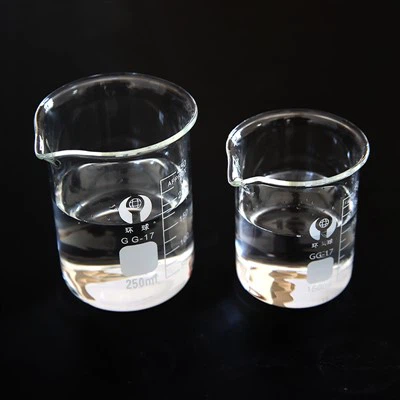
Vinyl Laurate (CAS No.: 2146-71-6) is an ester derived from lauric acid and vinyl alcohol, belonging to the family of vinyl esters.
It is a clear, colorless to light yellow liquid with a mild odor, typically stabilized with an inhibitor like MEHQ or hydroquinone to prevent unwanted polymerization during storage Its chemical formula is C₁₄H₂₆O₂, and it has a molecular weight of 226.36 g/mol.
Product Parameter (Specification)
|
Parameter |
Specification |
Unit / Notes |
|
Purity |
≥98% to ≥99.0% (GC) |
Depending on grade |
|
Appearance |
Colorless to Light Yellow |
Clear liquid |
|
Molecular Formula |
C₁₄H₂₆O₂ |
|
|
Molecular Weight |
226.36 |
g/mol |
|
Boiling Point |
254 °C |
at 1013 hPa (lit.) |
|
Density |
0.871 |
g/mL at 20 °C (lit.) |
|
Flash Point |
125 °C to 136 °C |
Closed cup |
|
Stabilizer |
~3 ppm HQ or MEHQ |
Added to inhibit polymerization |
Product Feature and Application
Features
● Reactive Monomer: Contains a vinyl group that allows for polymerization and copolymerization.
● Hydrophobic: The long laurate chain provides hydrophobic characteristics.
● Biobased Content: Features a high biobased carbon content (approx. 86%).

Applications
● Polymer Synthesis: Used as a comonomer to produce specialty vinyl polymers, coatings, adhesives, and sealants.
● Chemical Intermediate: Acts as an acyl donor in enzymatic synthesis for producing esters like sucrose laurate or modified starches.
● Research: Utilized in drug delivery, gene therapy, and tissue engineering research due to its biocompatibility.
Production Details
Vinyl Laurate is typically produced via a vinyl exchange reaction.
A common method involves reacting Lauric Acid with an excess of Vinyl Acetate in the presence of a catalyst (such as mercuric acetate or sulfuric acid) The reaction is carried out under reflux, followed by neutralization and vacuum distillation to purify the final product It is stabilized during production to ensure stability during transport and storage.


Product Qualification
The product meets high-quality standards with purity verified by Gas Chromatography (GC) Certificates of Analysis (CoA) are typically available upon request, detailing specific lot data such as exact purity, appearance, and compliance with specifications.
Deliver, Shipping and Serving
Packaging
Available in various pack sizes ranging from small glass bottles (e.g., 1 kg, 25 mL, 500 mL) for R&D to large industrial drums (e.g., 170 kg net, internally lacquered) for bulk production.
Shipping
Classified as non-hazardous for transport (RIDADR: NONH for all modes) Storage temperatures should be maintained between 10°C and 40°C in a cool, well-ventilated place, protected from light.
Serving
Bulk quantities and custom quotes are available upon request from suppliers.


FAQ
Q: How should Vinyl Laurate be stored?
A: It should be stored in a cool, dark, and well-ventilated area away from ignition sources, oxidizers, and direct sunlight. The container must be kept tightly closed. For extended storage, an inert atmosphere is recommended, and the shelf life is typically around 3 months.
Q: What is the purpose of the stabilizer (MEHQ/HQ)?
A: The stabilizer (MEHQ or Hydroquinone) is added to inhibit premature polymerization of the vinyl group during shipment and storage. It is present at very low concentrations (e.g., 3 ppm).
Q: Is Vinyl Lauste soluble in water?
A: No, it is hydrophobic and has very low solubility in water (max. 0.001 g/L at 20°C), but it is soluble in organic solvents like Methanol.
Hot Tags: vinyl laurate, China vinyl laurate manufacturers, factory, Vinyl Benzoate, Vinyl Pivalate, Glycidyl Neodecanoate, Chloromethyl Pivalate, T Butyl Pivalate, Vinyl Neodecanoate